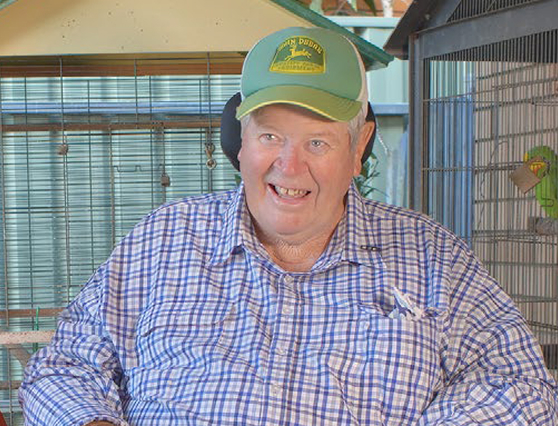
In 1975 I found out I had Muscular Dystrophy, and that was a real blow to me. So, I thought how am I going to work this then. I love sport too, cricket and tennis, and I couldn’t bowl fast enough for my cricket team and that was a real blow.
So as I got worse and worse over the years, from 1975 onwards I built or got engineers to help he put lifts on my tractor and on my header to harvest the grain and that was really great. That helped me out really, really well. That gave me another 25 years of farming making those lifts on my tractors and headers.
I had the employee fellas to help me on the land, because of the nature of the size of the operation I had. And of course, we had three children, so we went from there, and then when it all got too much for me about early 2000, we decided to sell because, you know, I was in the wheelchair full time then. So, we sold the farm which is sad but that was how it had to be and how I ended up in Grafton.
A farmer’s tale
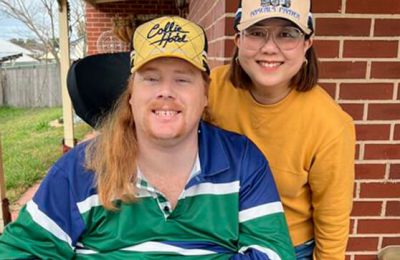
Gerry is a farmer. He spent many years working his 4,000-acre farm in Condobilin with his wife and three sons. In 1975, he was diagnosed with Muscular Dystrophy (MD), but that didn’t stop Gerry. He adapted his farming equipment to continue working on the land he loved for many more years.
As his MD progressed, Gerry and his wife Rose made the tough decision to sell their farm and move to Grafton and be closer to medical facilities. Gerry has been managing his own Support Workers since 2006 and is a font of knowledge for others contemplating the same.
“We've always found a way to make things work; it's how I've coped with life's challenges. We take great care of our Support Workers, handling hiring and firing ourselves. We're truly grateful for the people who help us. They understand my needs, and often I don’t even have to ask—they just know. It’s been a very successful arrangement.”
- Gerry, EYO Member
Kerrie’s story (Gerry’s Support Worker)
“I’ve been helping Gerry for the last three years with his daily physical support. It’s simple things like scratching his nose, or making sure his beloved radio is left on his tray at the end of my shift so he can enjoy talkback for the rest of the afternoon.”
“Gerry loves nicknames, so in the beginning, it was learning what belonged to what (equipment body parts, and everything). I worked in aged care for 23 years before becoming a Support Worker. I love the difference. You have time to build relationships, and it’s so much more rewarding. Gerry always makes me smile, and the simple things are important for his care.”
“I help Gerry live life the way he wants. We cut out stories from the newspaper that keep him in touch with his love of the land and his life before. He always wants to keep his special memories and I’m always happy to help him.”
- Kerrie, Support Worker
Rose and Gerry (video)
We’re both advocates for Gerry’s disease, but I’m more into the literacy side. I do all the paperwork, and we’re trying to get some sort of funding for him. None of the doctors could tell us anything, no one could. But we did hear from someone, that there was some funding available. In those days it was called Attend and Care Program, and we’re talking about 15 years ago. It took 2 years to get, but I had to write to all the members of parliament; state, federal, even the local. And we eventually got it after 2 years, so both of us are persistent. Gerry’s the chatter, he talks on the phone. And I do all the letters, yeah, so that’s how we deal with it and we still do.
Rose (video)
I think he was diagnosed when he was 20… 25… and I didn’t meet him till he was 27, so I just knew that his gait was a little bit different, and then we were told when it got serious, he was told what it was. They told us about the diagnosis, but the problem was no one knew what would happen, so I’d ask questions to the doctor and the specialist, what’s going to happen, they could not tell me. So it was just going day to day and it was a slow progression disease, so it’s as the time went on, just little things over the years. He might go four or five years and he’s the same, and then just have a fall and then it’ll set the balance off again, and so he’d get further into his disability, and that went on probably 25 years and then he got into the wheelchair so it was a very long progression of his disability.
Kerrie and Gerry (video)
Hi, my name is Kerrie, and I’ve worked for Gerry around just over 3 and a half years now. I would help Gerry through his daily activities, to having his shower and just even to making sure that all the things that I think he’s going to need throughout the day are within reach and accessible before I leave. Obviously, I help Gerry with all the physical parts of his life, and in helping Gerry be able to live his life the way he likes, and to be able to participate in the things that he likes to do. Something as simple as making sure The Land, the newspaper is easy in reach. Gerry, you know, loves The Land and his nostalgia, and he keeps all these things together. Just making sure, Gerry likes his things done in his own particular way, which is great, we all do. So just making sure that he’s comfortable with the way that we run the day and how it’s done, and that basically he is happy and lives his life when I’m gone.
“We have a good system that runs well, and I trust them 100% which is wonderful.”
- Rose, Gerry's Wife