Facebook-f Linkedin-in Youtube Instagram

(02) 8525 4000

Contact Us
Living My Way
  • Services
    • Employ Your Own Support Workers
    • Social + Community Participation
    • In-Home Support
    • High Intensity Daily Personal Activities
    • Support Coordination
    • Plan Management
  • About Us
    • Our Team
    • Meet Our Board
    • Our Charter of Rights
    • Give Feedback
    • Reports
  • Resources
    • Blog
    • News
    • Supporting Documents
    • NDIS Updates
  • Member Stories
  • Careers
  • Services
    • Employ Your Own Support Workers
    • Social + Community Participation
    • In-Home Support
    • High Intensity Daily Personal Activities
    • Support Coordination
    • Plan Management
  • About Us
    • Our Team
    • Meet Our Board
    • Our Charter of Rights
    • Give Feedback
    • Reports
  • Resources
    • Blog
    • News
    • Supporting Documents
    • NDIS Updates
  • Member Stories
  • Careers
Contact Us
Living My Way
(02) 8525 4000
  • Services
    • Employ Your Own Support Workers
    • Social + Community Participation
    • In-Home Support
    • High Intensity Daily Personal Activities
    • Support Coordination
    • Plan Management
  • About Us
    • Our Team
    • Meet Our Board
    • Our Charter of Rights
    • Give Feedback
    • Reports
  • Resources
    • Blog
    • News
    • Supporting Documents
    • NDIS Updates
  • Member Stories
  • Careers
  • Services
    • Employ Your Own Support Workers
    • Social + Community Participation
    • In-Home Support
    • High Intensity Daily Personal Activities
    • Support Coordination
    • Plan Management
  • About Us
    • Our Team
    • Meet Our Board
    • Our Charter of Rights
    • Give Feedback
    • Reports
  • Resources
    • Blog
    • News
    • Supporting Documents
    • NDIS Updates
  • Member Stories
  • Careers
Living My Way
  • Services
    • Employ Your Own Support Workers
    • Social + Community Participation
    • In-Home Support
    • High Intensity Daily Personal Activities
    • Support Coordination
    • Plan Management
  • About Us
    • Our Team
    • Meet Our Board
    • Our Charter of Rights
    • Give Feedback
    • Reports
  • Resources
    • Blog
    • News
    • Supporting Documents
    • NDIS Updates
  • Member Stories
  • Careers
  • Services
    • Employ Your Own Support Workers
    • Social + Community Participation
    • In-Home Support
    • High Intensity Daily Personal Activities
    • Support Coordination
    • Plan Management
  • About Us
    • Our Team
    • Meet Our Board
    • Our Charter of Rights
    • Give Feedback
    • Reports
  • Resources
    • Blog
    • News
    • Supporting Documents
    • NDIS Updates
  • Member Stories
  • Careers
(02) 8525 4000
Facebook-f Instagram Youtube
Enquire Now

From the “lucky few” to the lucky many: the story behind the Employ Your Own Support Worker model

  • January 22, 2026

Today, Living My Way’s Employ Your Own Support Worker service is recognised for giving people real choice and control over their support. Members choose who supports them — often someone they already know and trust — when support happens, and how their lives are lived.

But this model didn’t begin as a service offering or a policy idea. It began as a fight for independence.
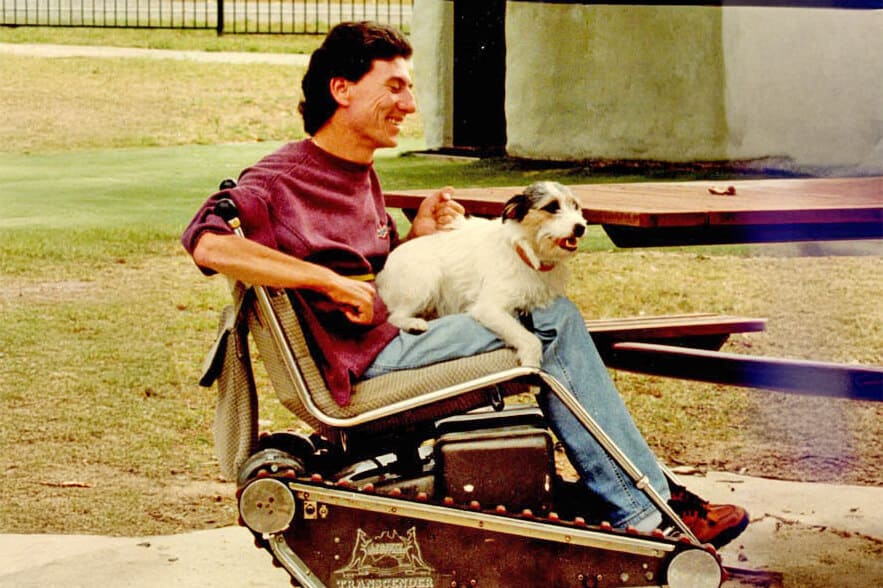
A man in a wheelchair smiling with his dog on his lap, going for a ride

Before choice was possible

Before the 1980s, people with physical disability in Australia were often given only two options. They could live in an institution, or remain at home relying on family, with little say over how or when support was provided.

Decisions about daily life, including when to get out of bed, who entered their home, and how support was delivered, were rarely in the hands of the person receiving care. Independence was limited, and autonomy was often treated as optional rather than essential.

A turning point in the early 1980s

In the early 1980s, a small group of people with disability — known as the “Lucky Few” — took part in a groundbreaking initiative known as the Attendant Care Pilot Study. Twenty four wheelchair users were given the opportunity to design, organise and manage their own support.

For the first time, people with disability could choose their own disability Support Workers, train them, and build their disability support services around the lives they wanted to lead, rather than fitting their lives around a service system.

The impact was immediate and profound. People moved out of their family homes, secured jobs, travelled, , formed relationships, and began shaping futures that had previously felt out of reach.

The pilot answered three critical questions with a clear yes. People with disability could manage their own care. They could responsibly manage funding. And supporting people to live independently was not only more humane, but  also meant they could be kept out of institutional care.

Fighting to protect independence

When the pilot study ended, there was no guarantee this disability support service model would continue. People with disability who had tasted independence were suddenly faced with the possibility of losing it.

In response, they organised, protested, lobbied and spoke directly to decision makers. They refused to go backwards. What followed was years of determined advocacy to protect the right to self-managed disability support services and to make that right available to others.

This was not just advocacy done for people with disability. It was advocacy led by people with disability, drawing on lived experience, persistence and a shared belief that independence should not be negotiable.

The birth of Living My Way

In 1992, that determination led to the creation of Allowance Inc, the organisation now known as Living My Way. It was established by people with disability, for people with disability, with a clear purpose.

The goal was to protect independence, reduce the administrative burden of employing Support Workers, and create a pathway so others could access the same freedom.

Living My Way introduced a model where Members employed their own Support Workers, while the organisation provided back of house support such as timesheets, taxes and bookkeeping. This allowed Members to stay firmly in control of their lives, without being overwhelmed by paperwork.

Becoming the Employ Your Own Support Worker model

Over time, this approach became known as the Employ Your Own Support Worker service. While funding systems evolved and the NDIS was introduced, the core principle has never changed.

Members remain the decision makers. They choose who enters their home, and this is often someone they already know and trust. They build long term, trusted relationships with community Support Workers. They shape their disability Support Worker services around their lives, not the other way around.

What began with fourteen people has grown into a community of Members across Sydney, Central West New South Wales and beyond, supported by a model that remains unique in its depth of choice and control.

Why this history still matters today

The Employ Your Own Support Worker service is not just a way of delivering disability support. It is the living result of decades of advocacy, courage and lived experience.

It exists because people with disability demanded better. They imagined a different future and insisted on being active participants in their own lives.

That history continues to guide Living My Way today. Every time a Member interviews a Support Worker, sets their own routine, or builds a life on their own terms, they are part of a story that began more than forty years ago.

From the “Lucky Few” to the lucky many, the Employ Your Own Support Worker model remains at the heart of Living My Way. It is proof that when people are trusted with control over their own lives, extraordinary things become possible.

Want to learn more?

If you’d like to learn more about how Living My Way’s Employ Your Own service can help you build a trusted support team that fits your life, our friendly team is here to help.

You can call us on (02) 8525 4000, email us via operations@lmwl.org.au or complete the contact us form on our website.

Share this article on...

Facebook
Twitter
LinkedIn
Living My Way

Supporting people
to live their life,
their way.

Winner! Enablement Awards 2025

Most outstanding Not-For-Profit Disability Support Services Provider in Australia in 2025

Living My Way

  • Home
  • Disability Support Services
  • About Us
  • Privacy Policy
  • Report Incident
  • Subscriptions
  • Give Feedback
  • Feedback and Complaints Policy
  • Home
  • Disability Support Services
  • About Us
  • Privacy Policy
  • Report Incident
  • Subscriptions
  • Give Feedback
  • Feedback and Complaints Policy
  • Home
  • Disability Support Services
  • About Us
  • Privacy Policy
  • Report Incident
  • Subscriptions
  • Give Feedback
  • Feedback and Complaints Policy
  • Home
  • Disability Support Services
  • About Us
  • Privacy Policy
  • Report Incident
  • Subscriptions
  • Give Feedback
  • Feedback and Complaints Policy

Contact Us

operations@lmwl.org.au
Phone (02) 8525 4000
Fax (02) 8525 4011

Facebook-f Instagram Youtube Linkedin-in
NDIS logo

Menai Head Office

Ground Floor, 44-60 Allison
Crescent, Menai NSW 2234

Mailing Address

PO Box 67, Menai Central,
NSW 2234

ABN

47 110 995 518

Acknowledgement of Country

Living My Way acknowledges the Dharawal people who are the Traditional Custodians of the land on which we work. Living My Way pays respect to Elders past and present and extends this respect to other Aboriginal people visiting our website.

Areas We Serve

We primarily offer disability support services across Sydney – including the Sutherland Shire, Georges River, Canterbury-Bankstown and Western Sydney regions – and Central West NSW. Some of our services are available across Australia, so if you live in a different region, please contact us to see if we can help you.

We're implementing the Child Safe Standards
Accessibility by WAH

“Storytelling is how we invite our Member voices to shine and share something meaningful… We want to inspire, engage and educate our community through real stories.”

“We all pitch in to get things done. I would say, hand on heart, that the people we employ are truly Memberfocused and understand how their role can help Members meet their aspirations.”