Facebook-f Linkedin-in Youtube Instagram

(02) 8525 4000

Contact Us
Living My Way
  • Services
    • Employ Your Own Support Workers
    • Social + Community Participation
    • In-Home Support
    • High Intensity Daily Personal Activities
    • Support Coordination
    • Plan Management
  • About Us
    • Our Team
    • Meet Our Board
    • Our Charter of Rights
    • Give Feedback
    • Reports
  • Resources
    • Blog
    • News
    • Supporting Documents
    • NDIS Updates
  • Member Stories
  • Careers
  • Services
    • Employ Your Own Support Workers
    • Social + Community Participation
    • In-Home Support
    • High Intensity Daily Personal Activities
    • Support Coordination
    • Plan Management
  • About Us
    • Our Team
    • Meet Our Board
    • Our Charter of Rights
    • Give Feedback
    • Reports
  • Resources
    • Blog
    • News
    • Supporting Documents
    • NDIS Updates
  • Member Stories
  • Careers
Contact Us
Living My Way
(02) 8525 4000
  • Services
    • Employ Your Own Support Workers
    • Social + Community Participation
    • In-Home Support
    • High Intensity Daily Personal Activities
    • Support Coordination
    • Plan Management
  • About Us
    • Our Team
    • Meet Our Board
    • Our Charter of Rights
    • Give Feedback
    • Reports
  • Resources
    • Blog
    • News
    • Supporting Documents
    • NDIS Updates
  • Member Stories
  • Careers
  • Services
    • Employ Your Own Support Workers
    • Social + Community Participation
    • In-Home Support
    • High Intensity Daily Personal Activities
    • Support Coordination
    • Plan Management
  • About Us
    • Our Team
    • Meet Our Board
    • Our Charter of Rights
    • Give Feedback
    • Reports
  • Resources
    • Blog
    • News
    • Supporting Documents
    • NDIS Updates
  • Member Stories
  • Careers
Living My Way
  • Services
    • Employ Your Own Support Workers
    • Social + Community Participation
    • In-Home Support
    • High Intensity Daily Personal Activities
    • Support Coordination
    • Plan Management
  • About Us
    • Our Team
    • Meet Our Board
    • Our Charter of Rights
    • Give Feedback
    • Reports
  • Resources
    • Blog
    • News
    • Supporting Documents
    • NDIS Updates
  • Member Stories
  • Careers
  • Services
    • Employ Your Own Support Workers
    • Social + Community Participation
    • In-Home Support
    • High Intensity Daily Personal Activities
    • Support Coordination
    • Plan Management
  • About Us
    • Our Team
    • Meet Our Board
    • Our Charter of Rights
    • Give Feedback
    • Reports
  • Resources
    • Blog
    • News
    • Supporting Documents
    • NDIS Updates
  • Member Stories
  • Careers
(02) 8525 4000
Facebook-f Instagram Youtube
Enquire Now

Why disability-inclusive language matters

  • January 22, 2026

Disability inclusion is a fundamental human right. UNICEF describes disability inclusion as creating societies where everyone, regardless of how they move, communicate, think or interact can participate equally.

That’s why the words we use matter. In disability support services, language can either reinforce outdated assumptions or actively promote dignity, respect and a true sense of belonging.

Using disability-inclusive and accessible language means recognising people as individuals first and ensuring our communication reflects respect, choice and lived experience.
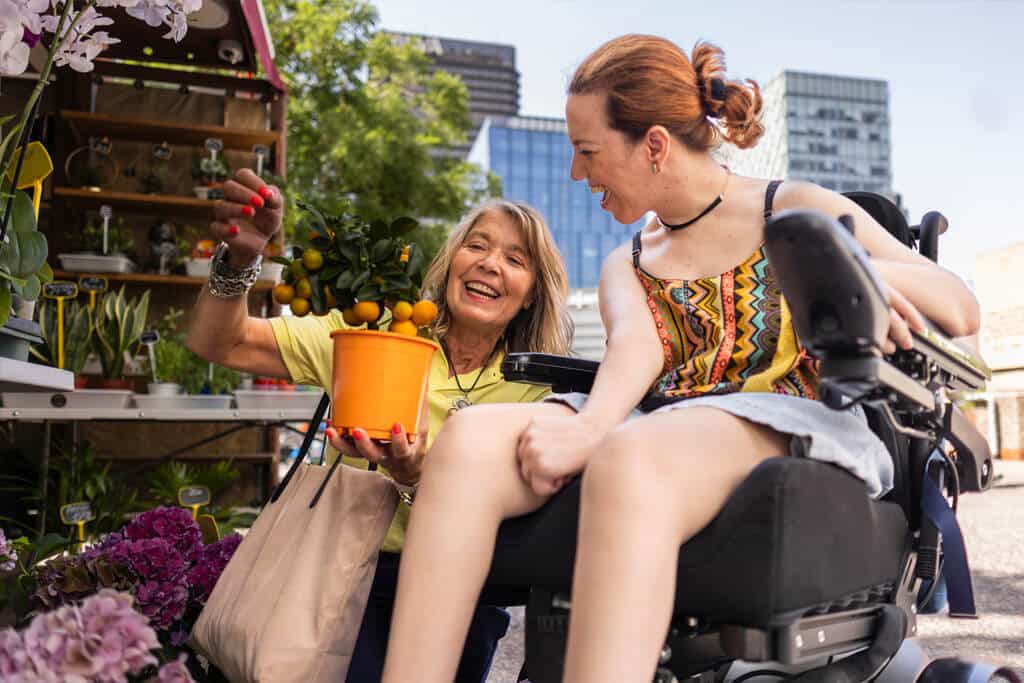
Two women laughing with each other. One woman is in a wheelchair

Putting people first

At Living My Way, we always put the person first before the disability. We recognise that disability is just one part of someone’s life, it does not define who they are.

Using person-centred language supports better disability services. When people are seen and spoken about as individuals, rather than just labels or conditions, they are more likely to be recognised and respected as decision makers in their own lives.

Accessible language is inclusive language

Accessible language goes beyond disability terminology. It is about making information easy to understand, regardless of someone’s background, education, cognitive style or communication needs.

In the disability support service space, this means:

  • Using clear, plain language
  • Avoiding unnecessary acronyms or explaining them when used
  • Breaking information into manageable sections
  • Being direct and respectful, without talking down to people

Accessible language supports choice and control. When information is clear, people can make informed decisions about their supports, services and lives.

Avoiding assumptions

One of the biggest barriers created by language is assumption. Assumptions about what people can or cannot do, what they want, or what kind of life they should lead.

Disability-inclusive language avoids framing disability as something tragic, inspirational or something that needs to be “fixed”. Instead, it recognises that people with disability live full, complex lives, just like everyone else.

For example, rather than saying someone “suffers from” a disability, it is more accurate and respectful to simply state that a person has a disability. This removes judgement and focuses on reality rather than emotion.

Listening to lived experience

Language evolves, and the best guide is always lived experience. People with disability are not a single group, and preferences can vary. Some people may identify strongly with disability identity, while others prefer more neutral language.

The most important thing is to listen, stay open, and be willing to adapt. Respectful language starts with respect for people’s voices and choices.

In disability care services in Sydney, this means checking in, asking questions when appropriate and recognising that the person receiving support is the expert in their own life.

Why this matters in disability support

Language sets the tone for every relationship. In disability support services, using respectful and accessible communication helps builds trust, confidence and partnership.

When people feel heard and respected, disability support becomes collaborative rather than transactional. It shifts the focus from “providing care” to supporting people to live life their way.

That is why disability-inclusive language is not a nice extra. It is a foundation of good disability support.

A shared responsibility

Creating inclusive language is not just the responsibility of people with disability. It is something we all contribute to, whether we are disability Support Workers, disability service providers, family members or community members.

By choosing words carefully, staying open to learning, and centring people in our language, we help create a more inclusive and respectful community for everyone.

At Living My Way, language is part of how we show respect, support independence and honour the voices of the people we work alongside every day.

Share this article on...

Facebook
Twitter
LinkedIn
Living My Way

Supporting people
to live their life,
their way.

Winner! Enablement Awards 2025

Most outstanding Not-For-Profit Disability Support Services Provider in Australia in 2025

Living My Way

  • Home
  • Disability Support Services
  • About Us
  • Privacy Policy
  • Report Incident
  • Subscriptions
  • Give Feedback
  • Feedback and Complaints Policy
  • Home
  • Disability Support Services
  • About Us
  • Privacy Policy
  • Report Incident
  • Subscriptions
  • Give Feedback
  • Feedback and Complaints Policy
  • Home
  • Disability Support Services
  • About Us
  • Privacy Policy
  • Report Incident
  • Subscriptions
  • Give Feedback
  • Feedback and Complaints Policy
  • Home
  • Disability Support Services
  • About Us
  • Privacy Policy
  • Report Incident
  • Subscriptions
  • Give Feedback
  • Feedback and Complaints Policy

Contact Us

operations@lmwl.org.au
Phone (02) 8525 4000
Fax (02) 8525 4011

Facebook-f Instagram Youtube Linkedin-in
NDIS logo

Menai Head Office

Ground Floor, 44-60 Allison
Crescent, Menai NSW 2234

Mailing Address

PO Box 67, Menai Central,
NSW 2234

ABN

47 110 995 518

Acknowledgement of Country

Living My Way acknowledges the Dharawal people who are the Traditional Custodians of the land on which we work. Living My Way pays respect to Elders past and present and extends this respect to other Aboriginal people visiting our website.

Areas We Serve

We primarily offer disability support services across Sydney – including the Sutherland Shire, Georges River, Canterbury-Bankstown and Western Sydney regions – and Central West NSW. Some of our services are available across Australia, so if you live in a different region, please contact us to see if we can help you.

We're implementing the Child Safe Standards
Accessibility by WAH

“Storytelling is how we invite our Member voices to shine and share something meaningful… We want to inspire, engage and educate our community through real stories.”

“We all pitch in to get things done. I would say, hand on heart, that the people we employ are truly Memberfocused and understand how their role can help Members meet their aspirations.”